
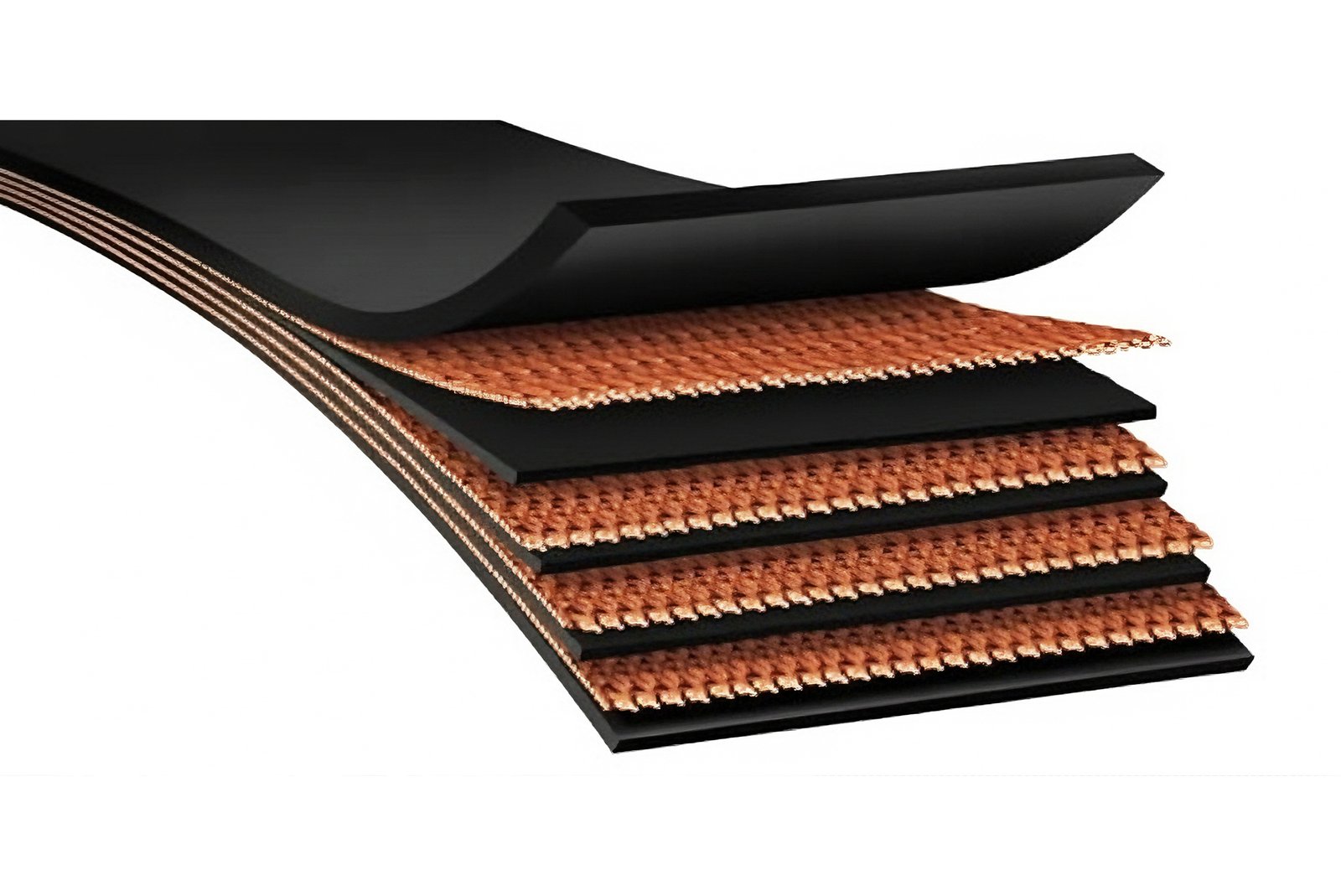
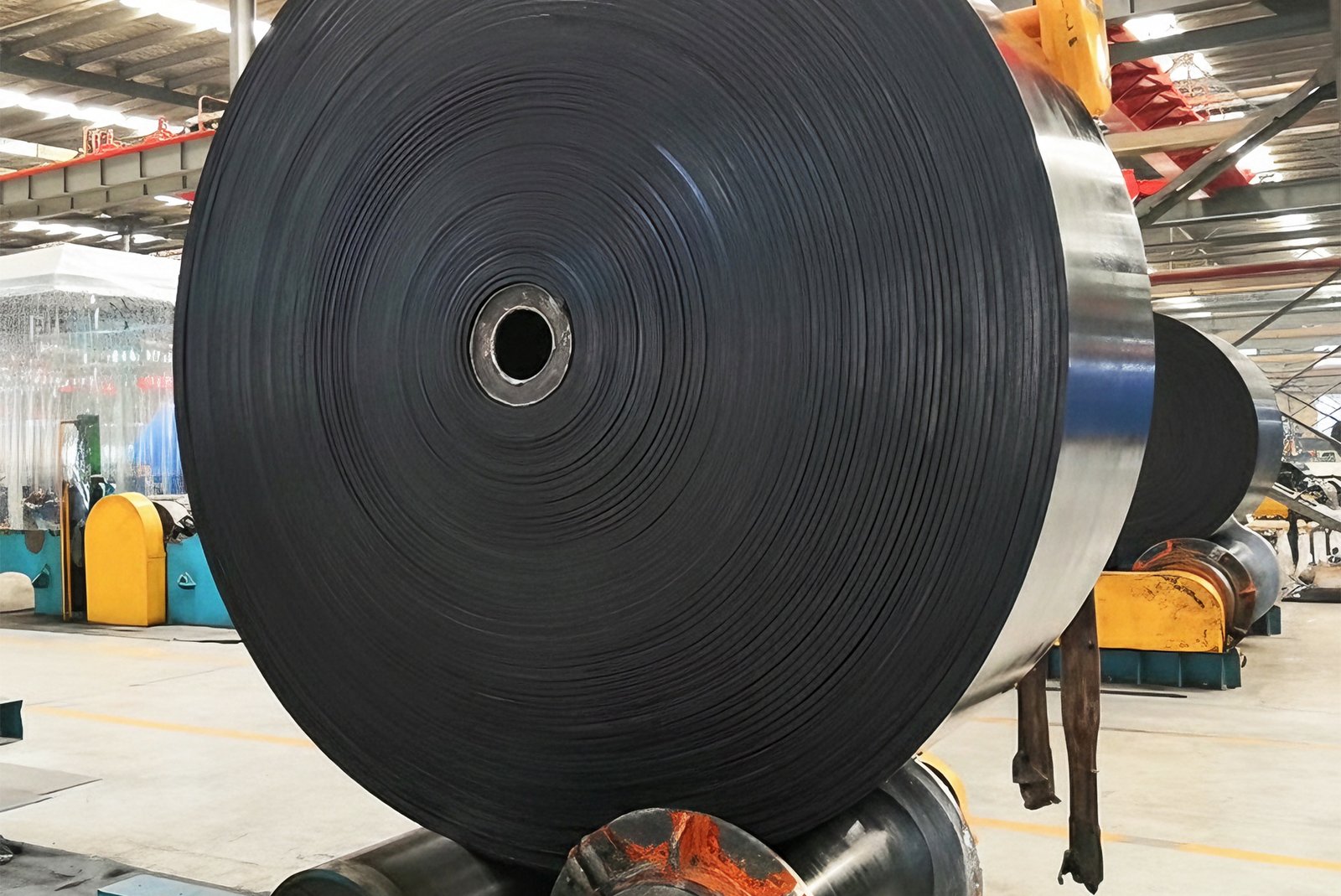
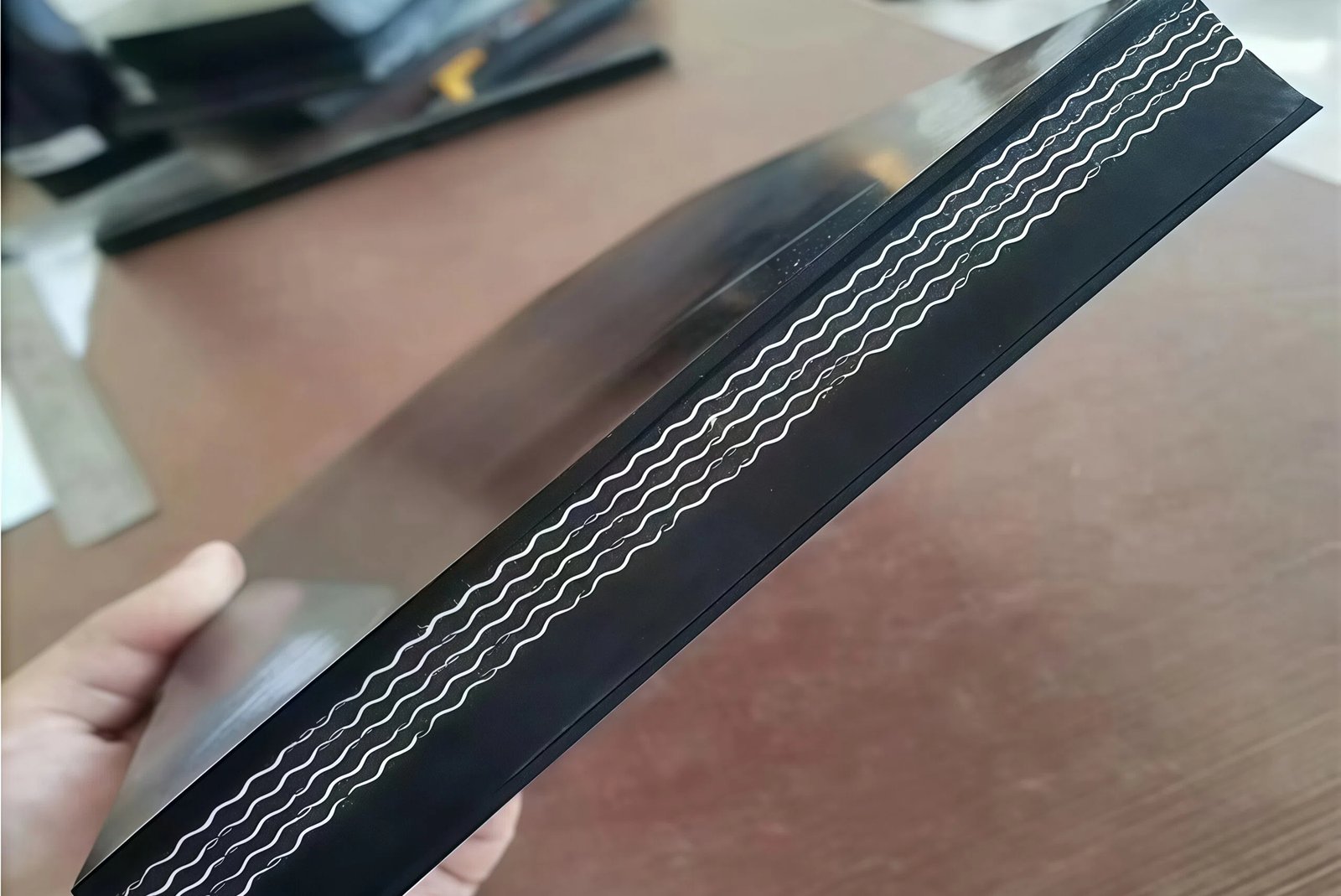
Hebei BAO’s Heat Resistant (HR) Conveyor Belts are engineered specifically to transport high-temperature bulk materials without compromising belt integrity or service life. Utilizing specialized synthetic rubber compounds (EPDM or Butyl) and a high-modulus textile carcass, our HR belts prevent early aging, cracking, and hardening common in standard belts subjected to heat. We provide customized solutions to meet all international heat classes (T1 to T4), ensuring maximum uptime and safety in high-thermal processing environments.
Key Features
- Exceptional Thermal Stability
- Specialized EPDM Rubber Compound
- Long-Lasting Ply Adhesion
- Prevents Cracking and Hardening
- Reduced Belt Surface Aging
- Customized Temperature Grading
Applications & Industries
Cement and Clinker Plants
Handles hot clinker, gypsum, and raw materials often reaching high temperatures efficiently.
Steel and Metallurgical Mills
Used for transporting heated ore, coke, and sintering materials in extreme thermal conditions.
Sintering and Coking Plants
Withstands the high continuous heat and brief temperature spikes of freshly produced coke.
Chemical and Fertilizer Processing
Ideal for moving dry chemical products where material residual heat is a concern.
As a specialized custom solution provider, Hebei BAO views these figures as performance benchmarks. We provide precision engineering, meaning the following parameters are fully negotiable and will be fine-tuned to your exact project needs: Belt Width, Cover Thickness, Ply Count, Rubber Grade. Our final product is certified to meet your unique specifications, ensuring optimized performance and longevity.
| Parameter | Unit | DIN Standard Requirement (T-Class) | BAO Standard Performance |
|---|---|---|---|
| Belt Type | - | EP (Polyester/Nylon) Recommended | EP 200 to EP 630 N/mm |
| Material Temperature (Max) | °C | T3: Max 150°C | Up to 150°C Continuous |
| Belt Surface Temperature (Max) | °C | T3: Max 180°C | Up to 180°C Max |
| Cover Rubber Type | - | EPDM or Butyl | High-Performance EPDM/Butyl Blend |
| Tensile Strength (Min) | MPa | DIN 22102 Y Grade | >= 18 MPa |
| Ply Adhesion (Min) | N/mm | Minimum DIN 22102 | >= 4.5 N/mm |
| Abrasion Loss | mm³ | Customizable based on material | <= 150 mm³ (Target Grade) |
| Test Item | Unit | Testing Condition | BAO T3 Performance Guarantee |
|---|---|---|---|
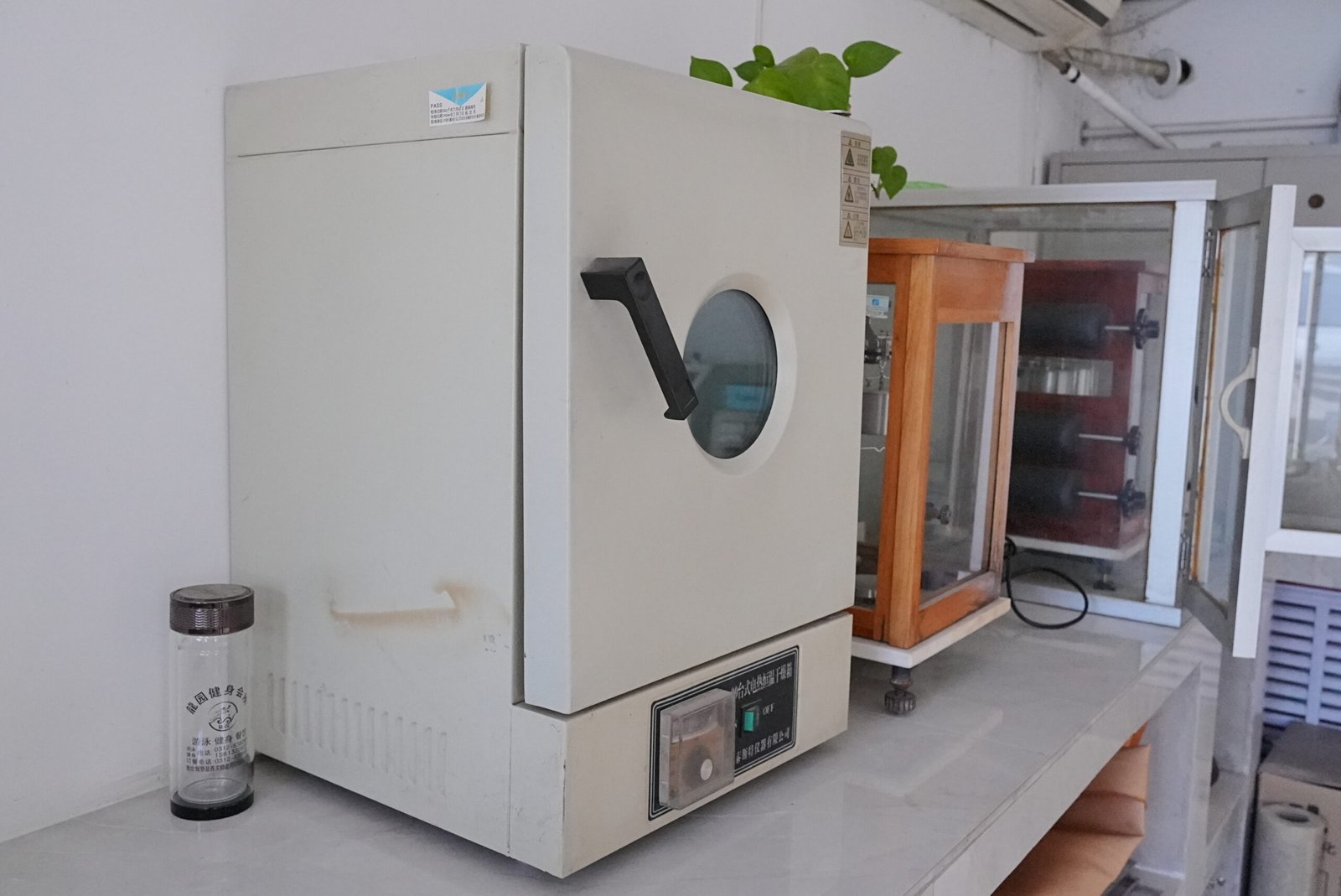
| Testing Standard | - | 7 days @ 150°C (Hot Air Aging Test) | BAO Internal QC Protocol |
| Hardness (Shore A) | IRHD | Difference before and after aging (Max) | <= +20 Change |
| Tensile Strength (MPa) | % | Change rate after aging (Max) | <= -15% Change (Competitor is -30%) |
| Tensile Strength (MPa) | MPa | Minimum value after aging (Min) | Min 12 MPa (Boao T3 Target) |
| Elongation at Break | % | Change rate after aging (Max) | <= -35% Change (Competitor is -50%) |
| Elongation at Break | % | Minimum value after aging (Min) | Min 350% (Boao T3 Target) |
BAO Manufacturing and QC Authority
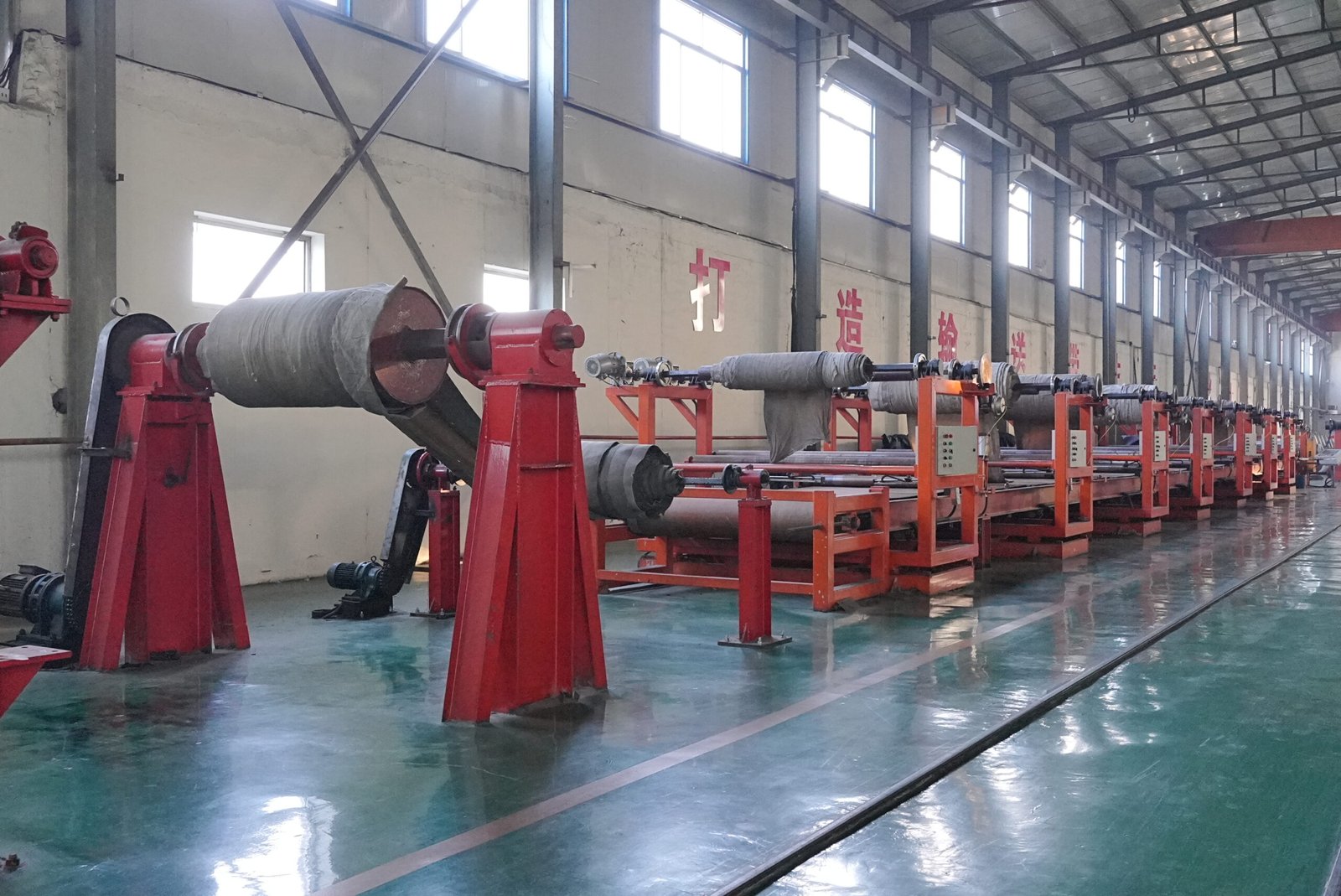
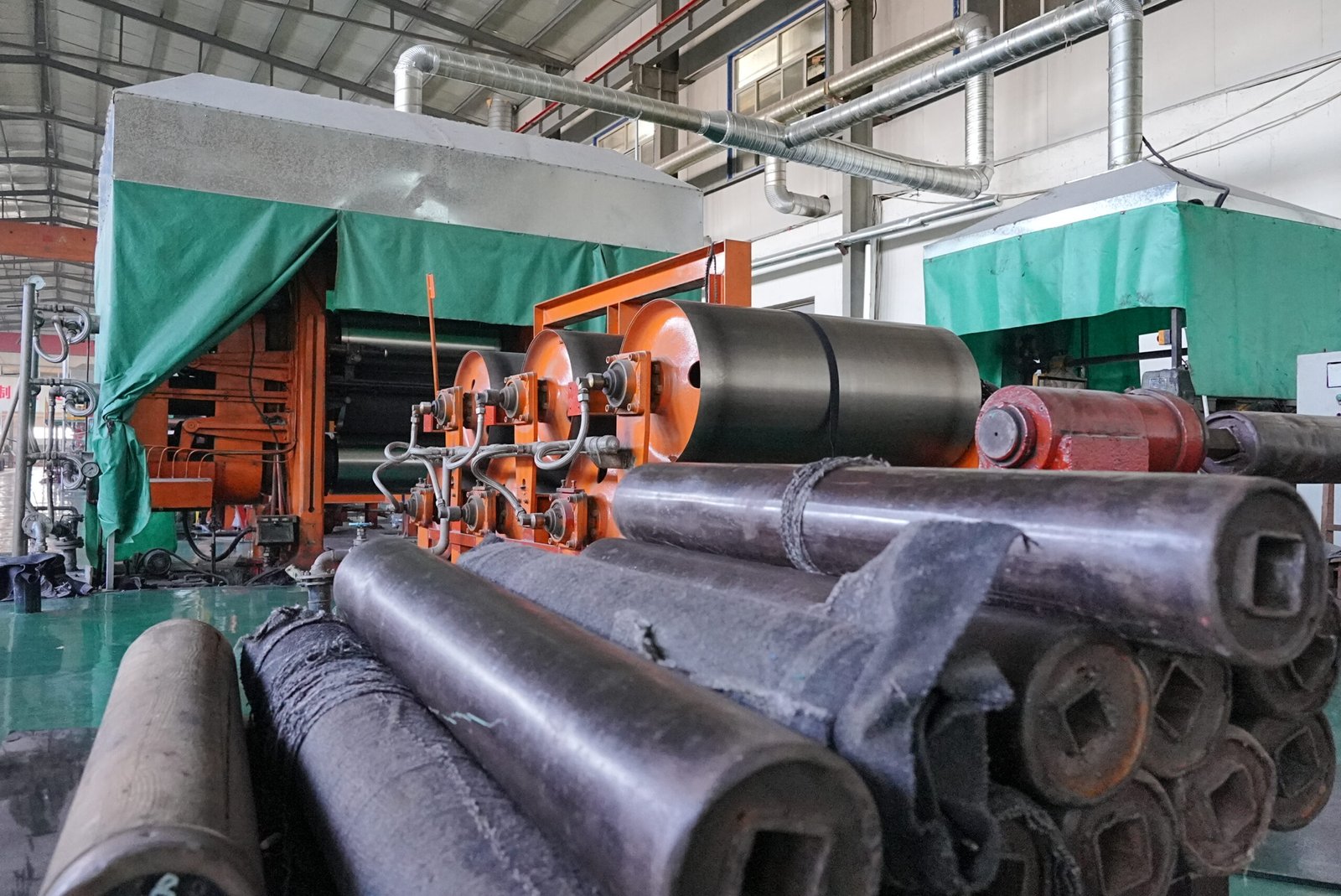
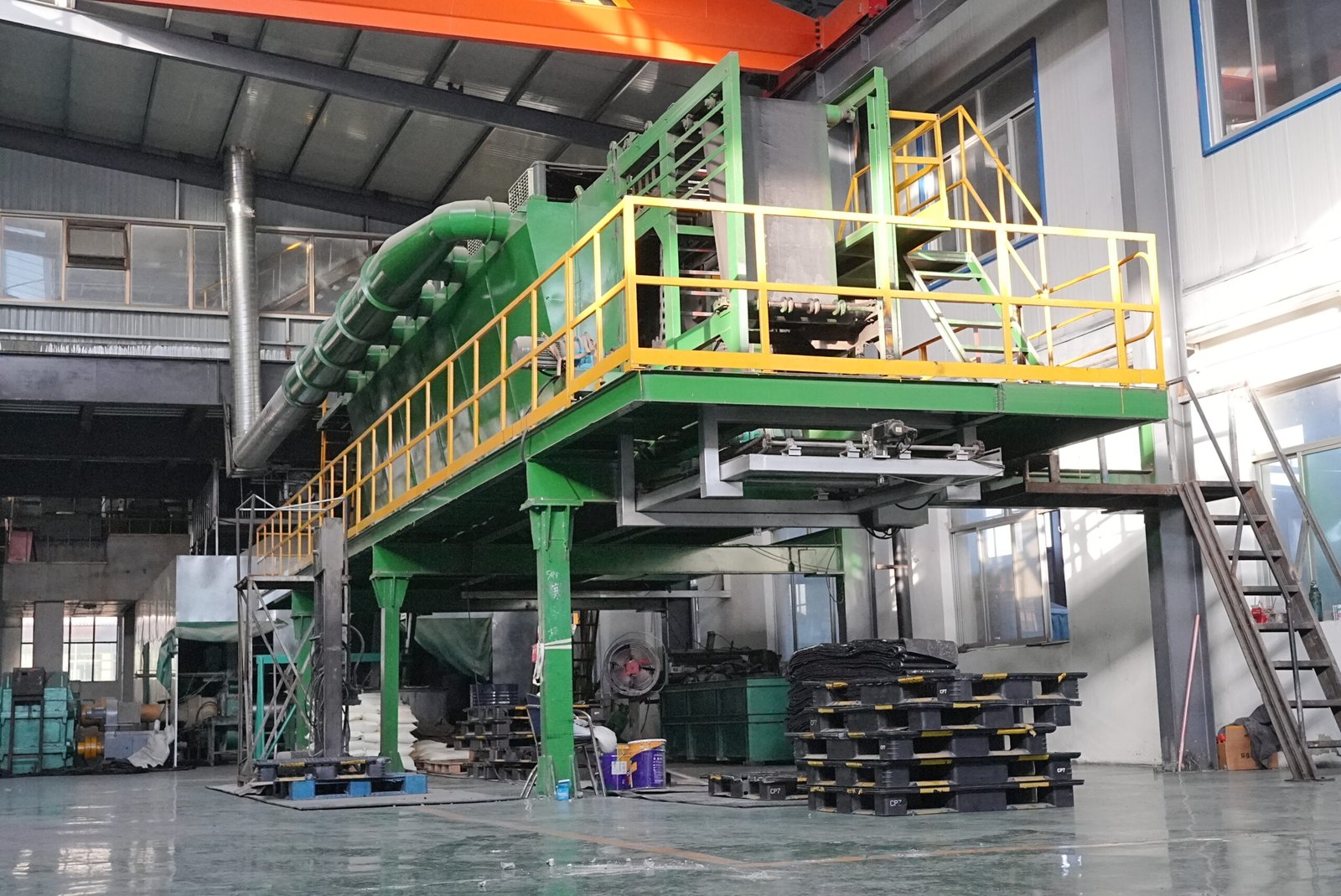
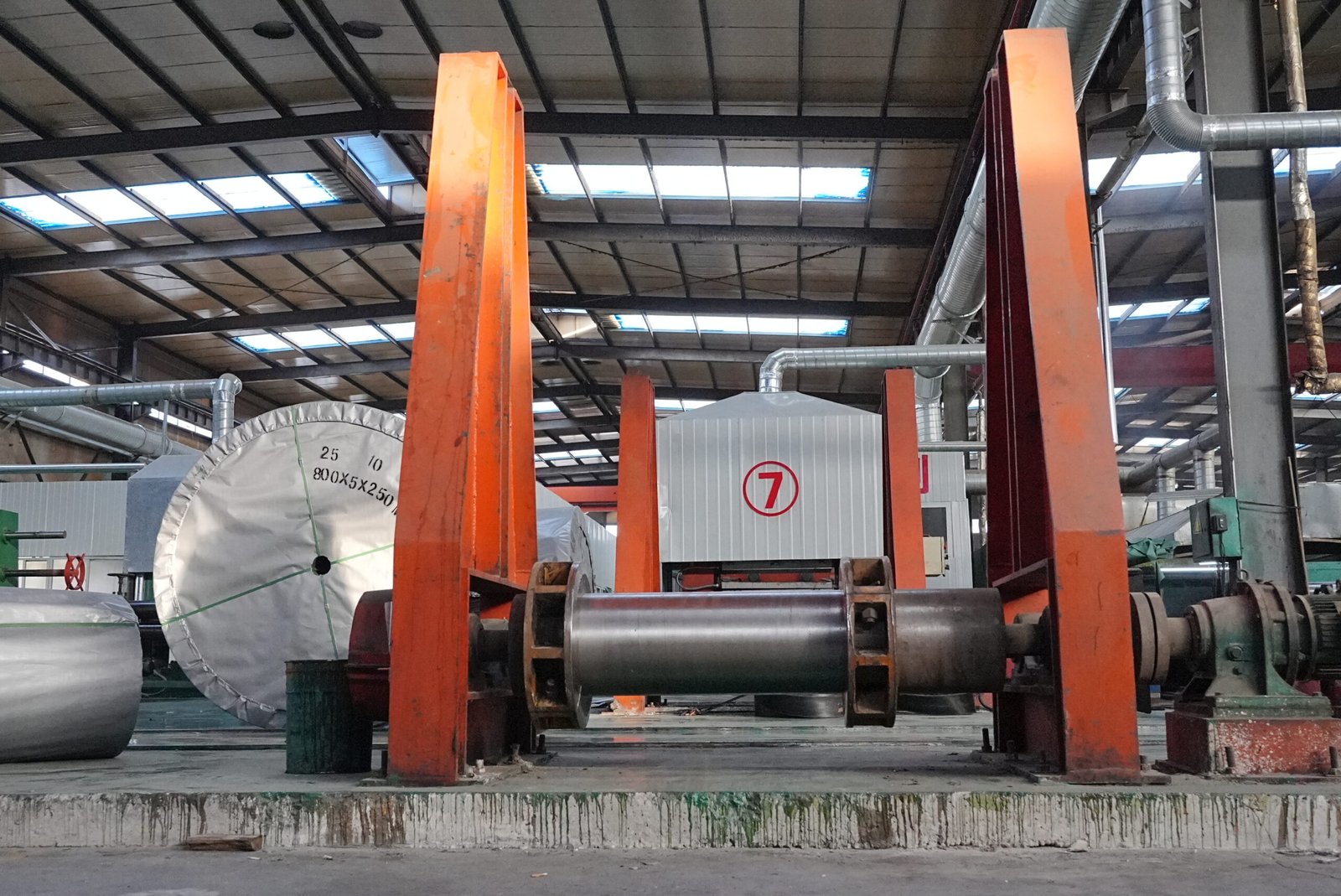
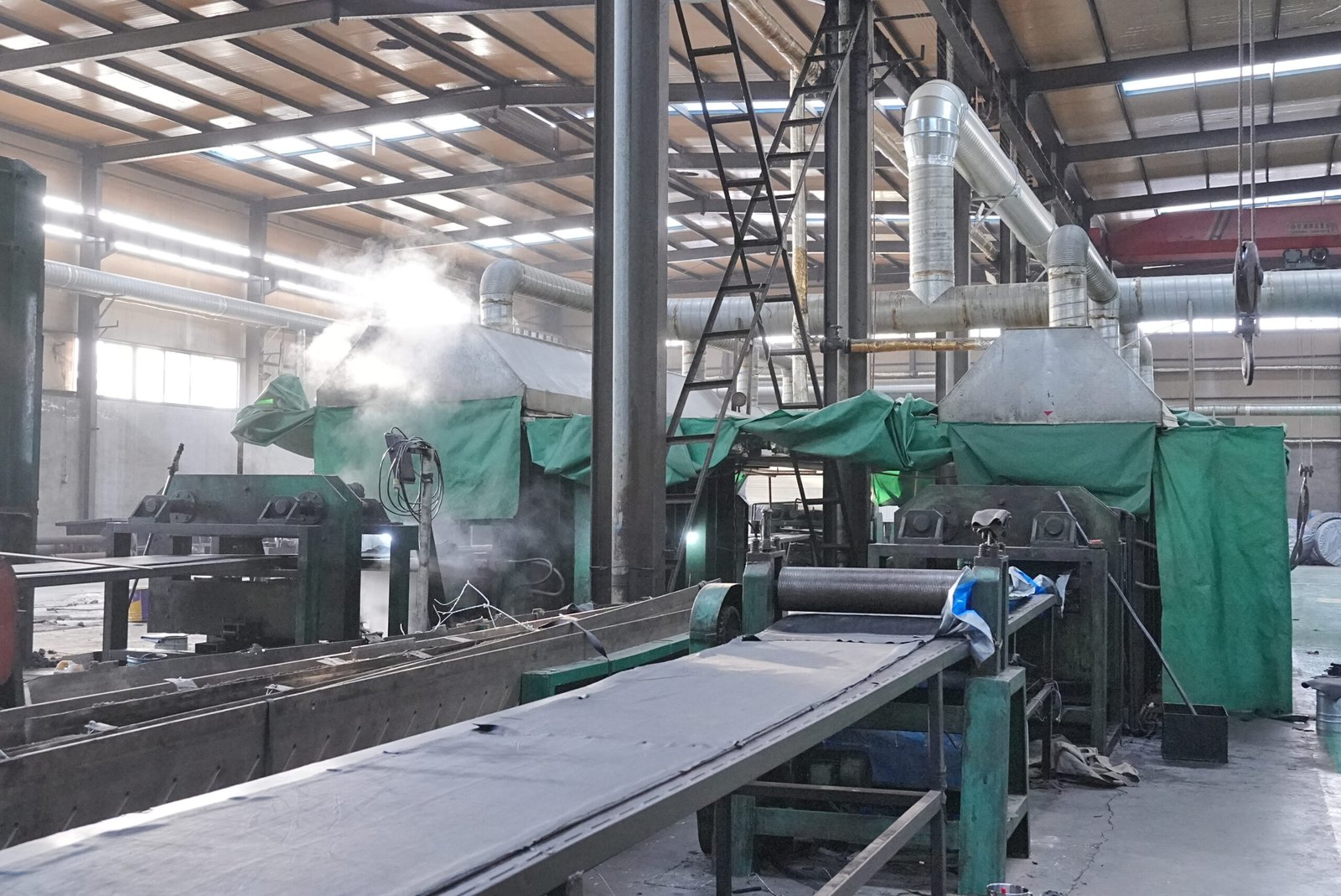
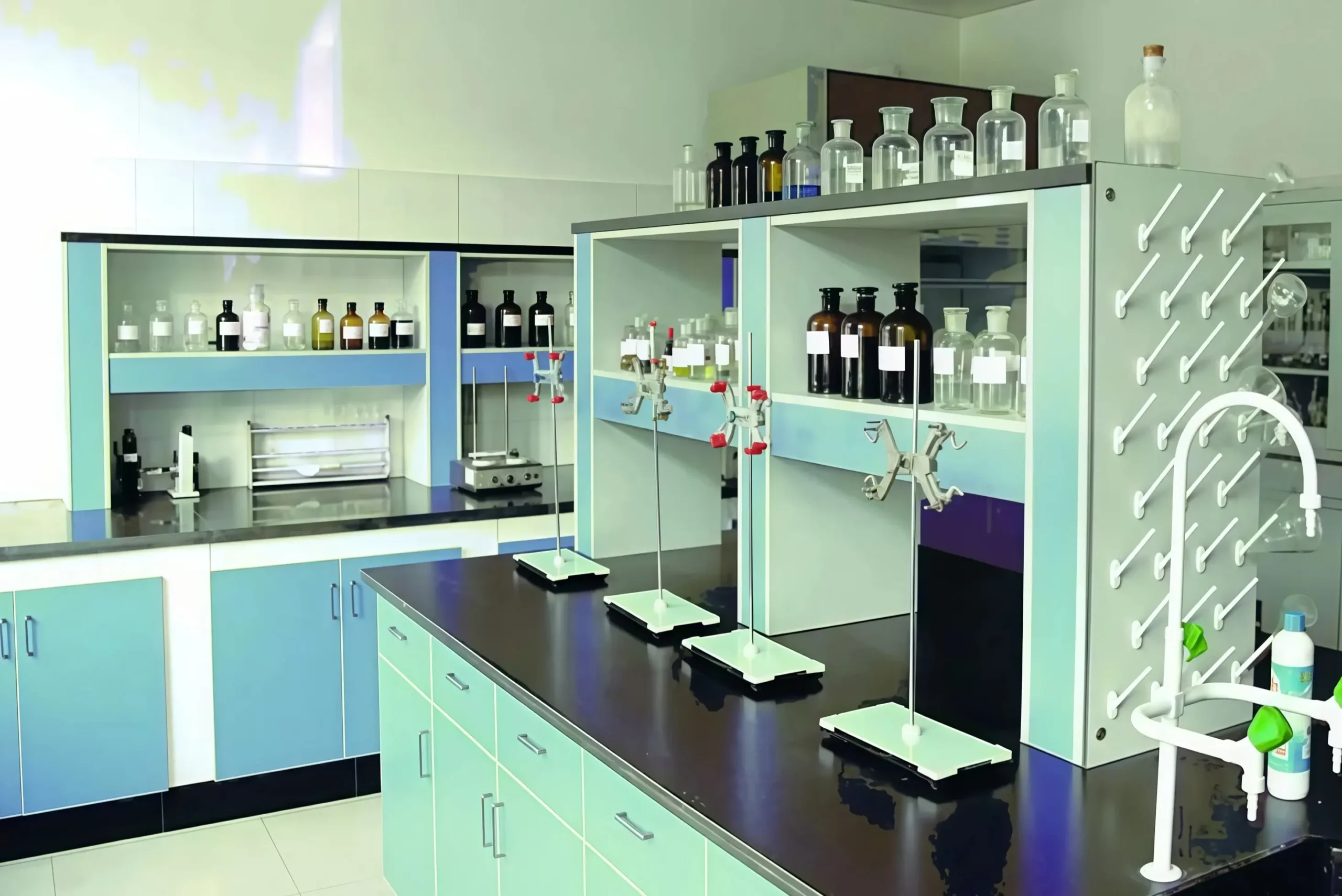
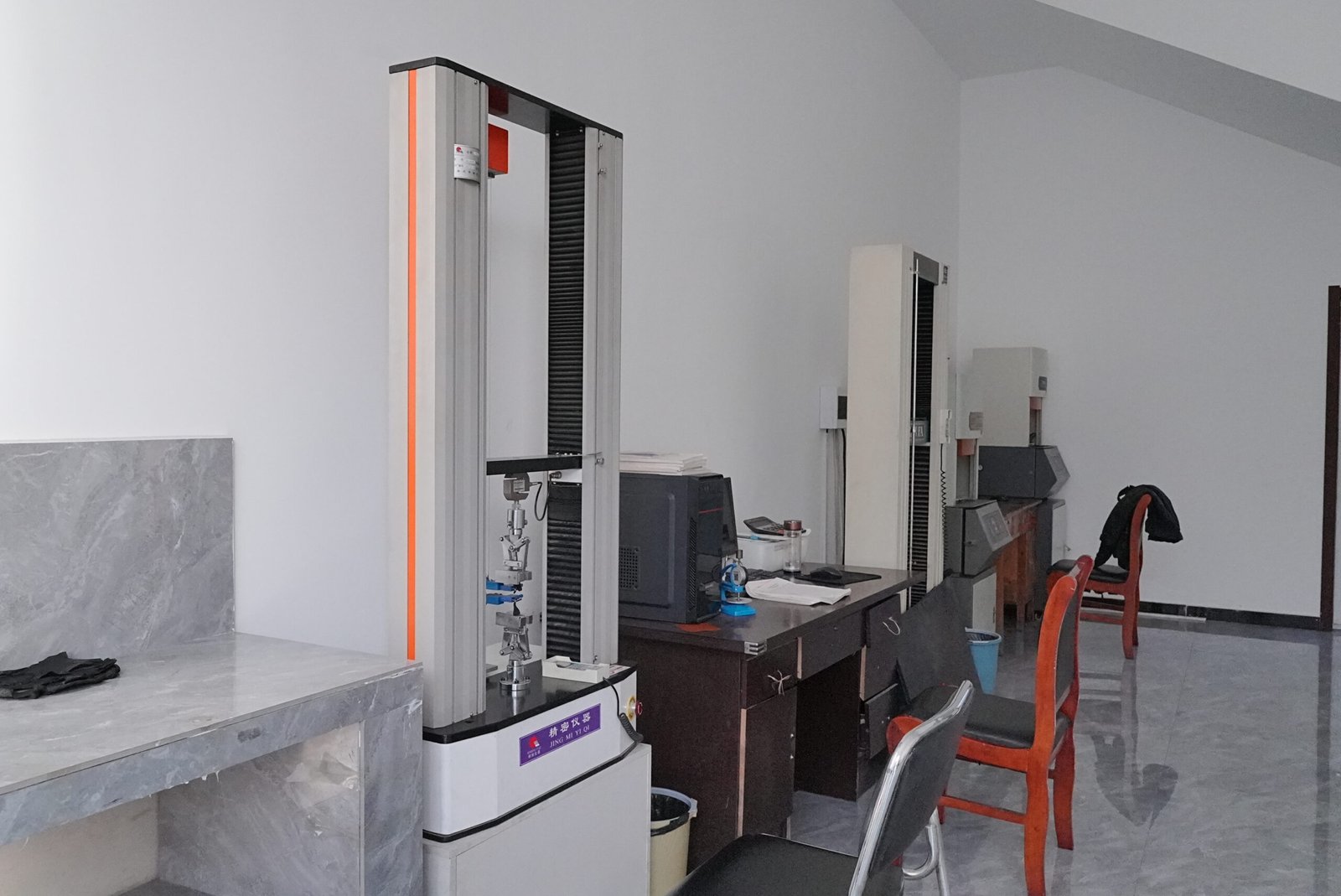
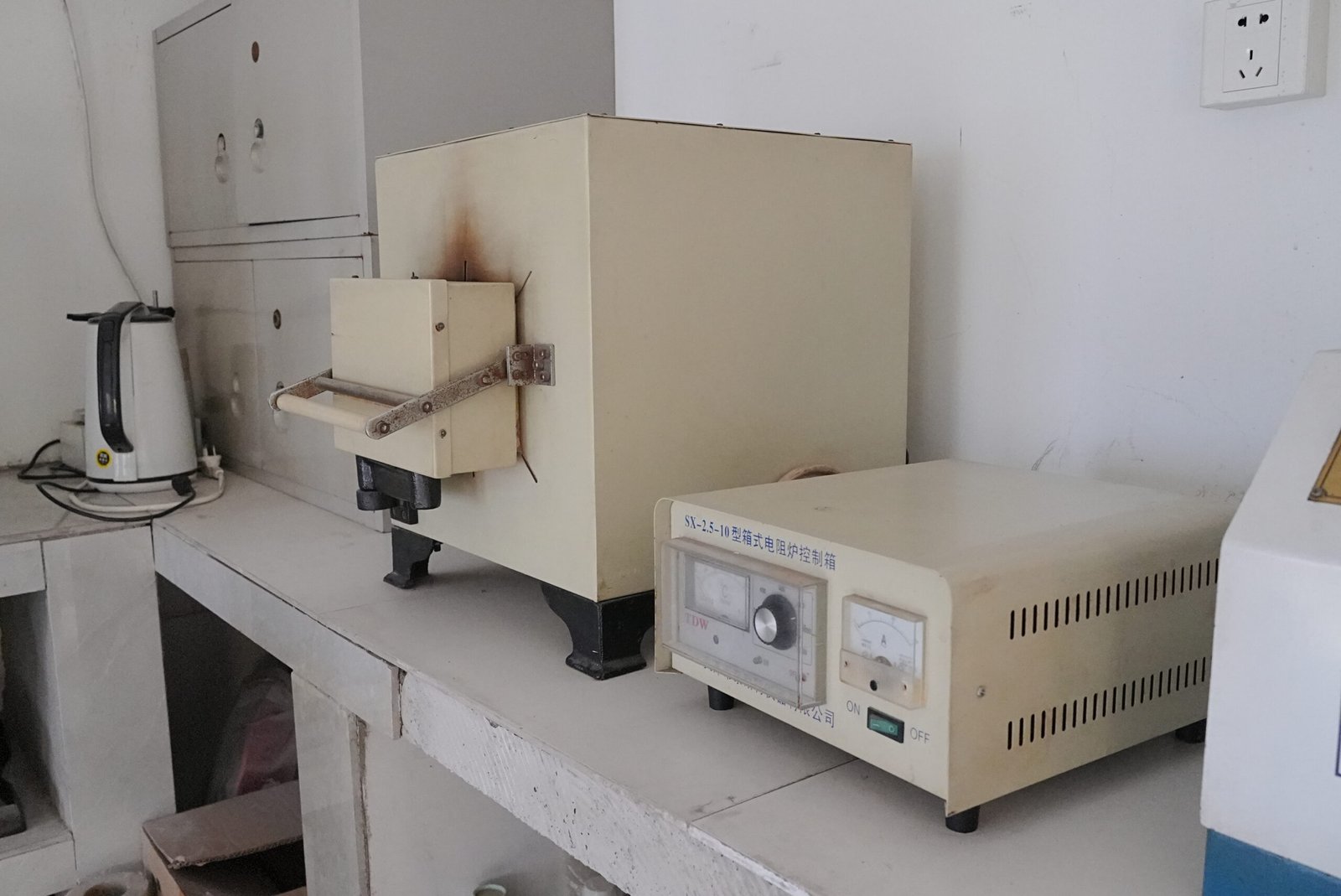
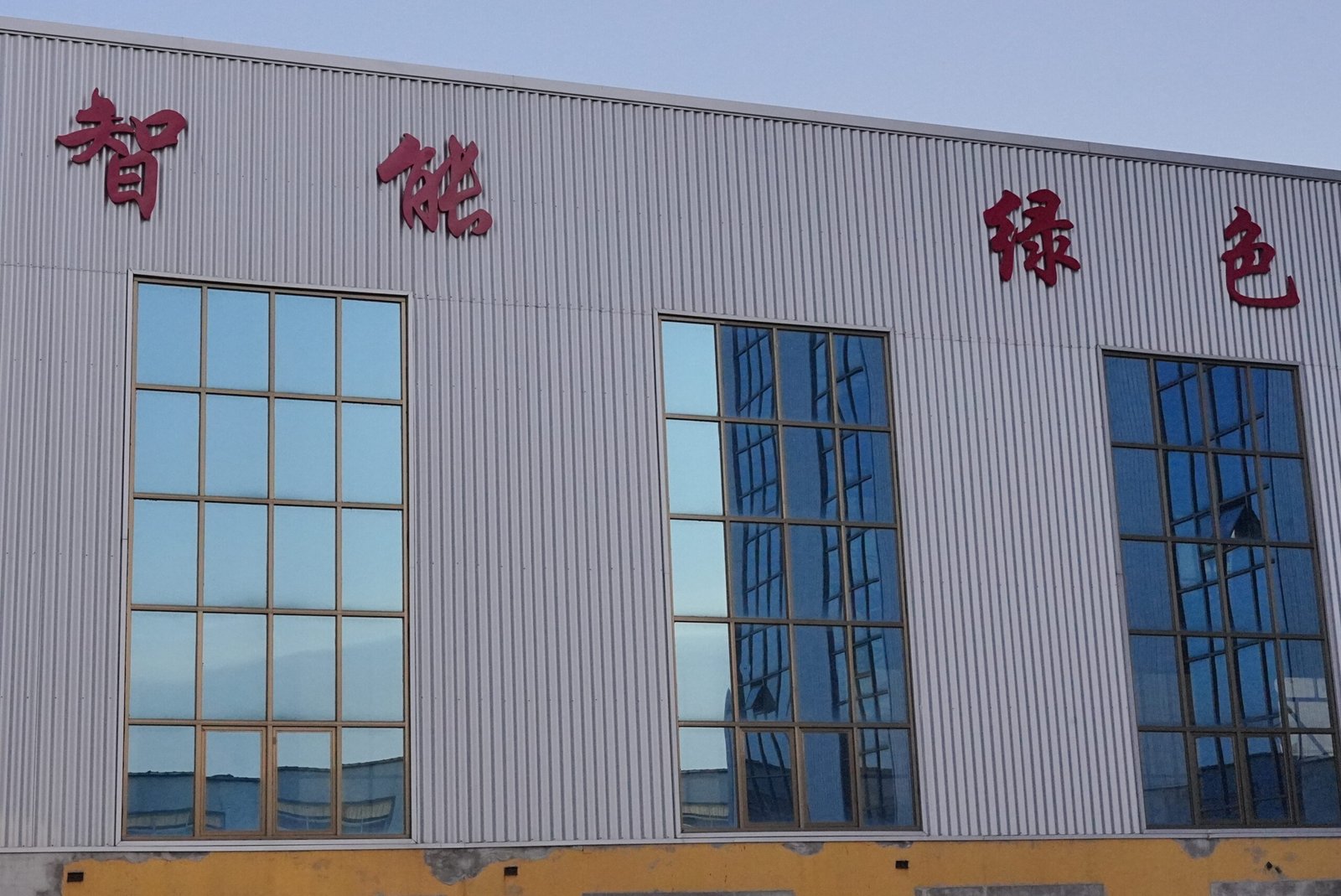
BAO is an established, large-scale manufacturer rooted in the Boye Industrial Hub, specializing in advanced heavy-duty conveyor systems since 1980. We integrate proprietary R&D and large-format production capacity up to 3300mm to deliver high-quality, technically demanding belting solutions globally.
Customized Process
01
Define Requirements
Client submits all necessary parameters: belt type, ply count, width, and specific environmental details for analysis.
02
Engineering Design
Our engineering team validates technical feasibility and designs the optimal carcass and rubber compound structure.
03
Material Validation
Raw materials are validated in our in-house lab to confirm integrity and performance before production commences.
04
Controlled Production
Manufacturing proceeds under strict QC protocols, utilizing high-capacity presses for a reliable, continuous supply.
05
Final Quality Check
Finished product undergoes comprehensive dimensional and physical property testing to verify compliance with order specifications.
06
Certified Delivery
Product is delivered with a complete quality inspection report, backed by long-term technical support services.
FAQs
1. How do HR belts maintain strength at high temperatures?
HR belts use heat-stable synthetic carcass fabrics (like EP) and specialized polymer covers (EPDM/Butyl) which are chemically designed to resist thermal oxidation.
2. Can I get an HR belt that is also highly abrasion resistant?
Yes, we customize the formulation. We can balance the heat resistance polymers with robust carbon black fillers to achieve superior abrasion performance in hot conditions.
3. What is the typical service life reduction for HR belts?
While heat reduces life, a correctly specified HR belt (T2, T3, etc.) will provide a durable service life of several years, significantly longer than an overstressed standard belt.
4. Is splicing different for heat resistant belts?
Yes, HR belts require specialized heat-resistant splicing compounds and often require higher vulcanizing temperatures to ensure the splice integrity matches the belt's thermal rating.
5. What information do you need to recommend the correct T-Class?
We require the maximum temperature of the material, the ambient temperature, the material particle size, and the frequency of use (continuous or intermittent).
6. Do HR belts require specialized cleaners or maintenance?
HR belts should not be cleaned with petroleum-based solvents. We recommend standard brushes and scrapers, and regular inspection for thermal cracks.
OUR PRODUCTS
DOWNLOAD BROCHURE
Company Profile.PDF
Services Detail.PDF
LET'S START PROJECT
+85244631970
Talk directly to a Senior Engineer for technical consultation and bespoke pricing.

Get In Touch With Us
our experts are ready to assist with your conveyor belt needs.
Our address:
Daqi Industrial Zone, Boye County, Baoding City, Hebei Province, China
Email us anytime
fiona@baoconveyorbelt.com
+85244631970